
Gypsum Vs POP Ceilings: Which Material is Right for Your Home?
When it comes to enhancing the interior of your home, false ceilings have become a popular choice for adding style and functionality. They not only elevate the aesthetic appeal of a room but also serve practical purposes like concealing electrical wiring and duct work while providing insulation and improving acoustics. Among the various materials used for false ceilings, Gypsum and Plaster of Paris (POP) are two popular options that homeowners often consider. In this blog, we'll delve into the key differences between Gypsum and POP ceilings, helping you make an informed decision for your home.
Gypsum Ceilings:

Gypsum ceilings, often referred to as Gypsum board or Plasterboard ceilings, are manufactured from hydrated Calcium Sulfate. These boards are available in different thicknesses and sizes, making them versatile for various ceiling designs. Gypsum boards are relatively easy to install, as they are cut according to the required dimensions and fixed onto a metal framework suspended from the ceiling. They are commonly used for both false ceilings and partition walls in office interiors.
POP Ceilings:
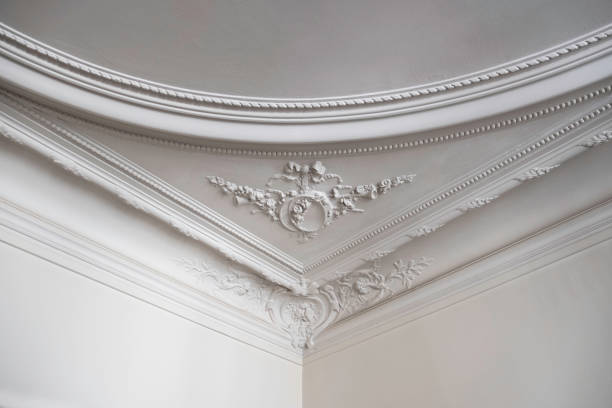
Plaster of Paris, known as POP, is a dehydrated form of gypsum available in powdered form. When mixed with water, it rehydrates and sets into a hard and durable material, allowing for unique and seamless ceiling designs. To create a POP false ceiling, the paste is applied on a mesh frame, which is then molded into the desired shape and dried to achieve maximum hardness. POP ceilings offer excellent moldability, making them suitable for creating intricate designs, curves, and cornices.
Comparison of Gypsum Vs POP Ceilings
Installation and Mouldability:
- Gypsum ceilings are relatively quick to install due to pre-cut boards, but they lack the moldability to create curved or ornate designs.
- POP ceilings, on the other hand, require more time for installation, as the paste is applied in situ and shaped as desired, allowing for versatile and artistic designs.
Durability and Cracks:
- Both Gypsum and POP ceilings offer long-lasting durability.
- Gypsum ceilings generally have a flat surface that is less prone to cracks, while the possibility of cracks in POP ceilings depends on workmanship and material mix.
Finishing and Repairs:
- Gypsum ceilings require finishing using POP slurry on joints, while POP ceilings have seamless joints.
- Repairing Gypsum ceilings may involve re-installation of the entire board, whereas POP ceilings allow for easy repairs by cutting and redoing a specific portion.
Cost and Wastage:
- Gypsum ceilings are usually more expensive than POP ceilings.
- POP ceilings can be cost-effective as you mix only the required amount of powder, minimizing wastage.
Design and Aesthetics:
- Gypsum ceilings are suitable for straight-line designs, while POP ceilings excel in creating flowing curves and intricate patterns.
Quality:
When it comes to choosing between Gypsum and POP ceilings, considering the quality of the materials is crucial. Gypsum boards are known for their high-quality composition, offering strength and durability. They are manufactured with precise standards, ensuring consistent performance and longevity. On the other hand, POP ceilings' quality heavily depends on the craftsmanship and expertise of the labor applying the plaster. Using inferior quality materials or improper application can compromise the overall finish and durability of the POP ceiling. To ensure a top-notch false ceiling, it's essential to opt for genuine and standardized materials, whether you choose Gypsum or POP.
Moisture:
Another important consideration is moisture resistance, especially in areas with higher humidity levels or exposure to water. Gypsum boards have inherent moisture-resistant properties, making them suitable for bathrooms and areas prone to dampness. However, proper installation practices, including sealing joints and using appropriate coatings, are essential to enhance their moisture resistance further. On the other hand, POP ceilings are more susceptible to moisture damage, and special care must be taken to protect them from direct water exposure. Applying a moisture-resistant coating or using water-resistant additives during the plastering process can help increase the longevity of POP ceilings in areas with mild humidity.
Skill Labor:
The skill and expertise of the labor involved in the installation play a significant role in the final outcome of both Gypsum and POP ceilings. Gypsum boards are pre-manufactured, making their installation relatively straightforward and quicker. However, precision and attention to detail are still required during installation to ensure seamless joints and a polished finish. On the other hand, POP ceilings require skilled labor for on-site application and shaping. Achieving intricate designs, curves, and cornices with POP requires experienced craftsmen who can bring your creative vision to life. Opting for trained and skilled professionals ensures that the false ceiling is installed accurately and aesthetically, regardless of whether you choose Gypsum or POP.
In conclusion, when considering quality, moisture resistance, and skill labor, both Gypsum and POP ceilings have their strengths and weaknesses. Gypsum boards offer consistent quality and inherent moisture resistance, making them ideal for areas with humidity. On the other hand, POP ceilings offer unmatched design flexibility but require skilled labor for intricate installations. Making an informed decision depends on your specific requirements and design preferences, as well as ensuring the use of quality materials and skilled professionals for a flawless false ceiling in your home.
Frequently Asked Questions (FAQs):
- Which is better for false ceilings, Gypsum or POP?
The choice between Gypsum and POP false ceilings depends on your specific needs and preferences. Gypsum ceilings are ideal for quick installations and straight-line designs, while POP ceilings offer more design flexibility with intricate patterns and flowing curves.
- Are Gypsum ceilings more expensive than POP ceilings?
Yes, Gypsum ceilings are generally more expensive than POP ceilings due to the manufacturing process and material costs. However, the difference in cost may vary depending on the specific project requirements and market factors.
- Are Gypsum and POP ceilings durable?
Both Gypsum and POP ceilings are known for their durability and can last for many years when installed and maintained properly.
- Can I install a Gypsum or POP ceiling on my own?
While it is possible to undertake DIY installations, it is recommended to hire professionals for false ceiling projects. Proper installation ensures the longevity and safety of the ceilings and ensures that the desired design is achieved.
- Are Gypsum and POP ceilings fire-resistant?
Yes, both Gypsum and POP ceilings are fire-resistant, which adds an extra layer of safety to your home.
- Can I incorporate both Gypsum and POP in my false ceiling design?
Absolutely! Combining Gypsum and POP in your false ceiling design can create a unique and striking look. You can use Gypsum boards for the main ceiling and add POP elements for intricate designs and cornices.
- How do I maintain Gypsum and POP ceilings?
Gypsum ceilings require minimal maintenance and can be easily cleaned with a soft cloth or a gentle vacuum. For POP ceilings, regular dusting and occasional touch-ups can help maintain their appearance.
- Can Gypsum and POP ceilings support lighting fixtures?
Yes, both Gypsum and POP ceilings can support lighting fixtures. However, it is essential to consider the weight and design of the fixtures to ensure they are properly installed and do not strain the false ceiling.
- Which material is better for sound insulation, Gypsum or POP?
Both Gypsum and POP provide some level of sound insulation, but Gypsum boards are generally better at dampening sound due to their composition.
- Can I paint Gypsum and POP ceilings?
Yes, both Gypsum and POP ceilings can be painted. However, it is crucial to prepare the surface adequately before painting to achieve a smooth and long-lasting finish.
Remember, when choosing between Gypsum and POP ceilings, consider your budget, desired design, and practical requirements to make an informed decision for your home's false ceiling. If you have any specific questions or need expert guidance, don't hesitate to reach out to professionals in the field.
Conclusion:
Choosing between Gypsum and POP ceilings depends on your specific requirements and design preferences. If you seek a quick and straightforward false ceiling with straight-line designs, Gypsum boards might be the right choice. On the other hand, if you desire unique and artistic designs with flowing curves, POP ceilings offer the flexibility and craftsmanship to bring your vision to life. Consider the pros and cons of each material before making your decision. Remember, a well-designed false ceiling can transform the ambiance of your home, so choose wisely to achieve the perfect look for your living spaces.


Post a Comment